






Consultation of a gynecologist
Медицинское обследование, направленное на диагностику, лечение и профилактику заболеваний женской репродуктивной системы.

Гинекологические консультации важны для своевременного выявления и лечения инфекций, воспалительных процессов, доброкачественных и злокачественных новообразований, а также нарушений менструального цикла и проблем с фертильностью.
Before consulting a gynecologist, it is recommended to collect the results of previous studies and tests, prepare a list of medications and supplements, record the symptoms with their duration, and mark the date of the last menstruation. It is also important to inform the doctor about chronic diseases and allergies.
During the consultation, the doctor collects an anamnesis, clarifies the patient's complaints and symptoms. Then he performs an examination on a gynecological chair to assess the condition of the vagina and cervix. The doctor can take a smear for cytological examination (PAP test), a smear for human papillomavirus, swabs to assess the state of the vaginal microflora, and also perform an ultrasound examination of the pelvic organs. If necessary, additional blood and urine tests are prescribed. At the end of the consultation, the doctor discusses the results of the examination, makes recommendations and, if necessary, prescribes treatment.
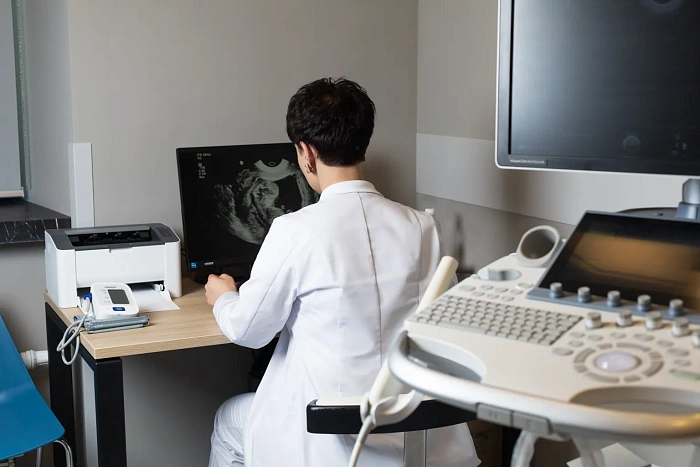
The gynecologist uses instruments for examination, an ultrasound machine for examining the pelvic organs and a colposcope for a detailed examination of the cervix. The examination is performed on a gynecological chair.
If tests have been taken, wait for their results and, if necessary, make an appointment again to discuss further steps. Regular visits to the gynecologist will help maintain health and detect any changes in a timely manner.
Benefits
Accurate diagnosis
Consultation with a gynecologist allows you to identify the causes of gynecological symptoms and make an accurate diagnosis.
Individual approach
The doctor develops a treatment and prevention plan, taking into account the patient's health characteristics.
Highly qualified specialists
Consultations are conducted by experienced gynecologists who have helped hundreds of patients.
Modern methods
The doctor uses the latest diagnostic and treatment methods to ensure the best results.
In what cases is it necessary to see a doctor?
Pain in the lower abdomen
Regular or sudden pain in the lower abdomen
Menstrual disorders
Irregular, excessive, or painful menstruation
Unusual discharge
Assessment of the general state of health during pregnancy planning
Pain during sexual intercourse
Discomfort can be a sign of infections, hormonal disorders, or physiological problems.
Preparation for consultation
Before consulting a gynecologist, it is recommended to collect the results of previous studies and tests, prepare a list of medications and supplements, record the symptoms with their duration, and mark the date of the last menstruation. It is also important to inform the doctor about chronic diseases and allergies.

Consultation
During the consultation, the doctor collects an anamnesis, clarifies the patient's complaints and symptoms. Then he performs an examination on a gynecological chair to assess the condition of the vagina and cervix. The doctor can take a smear for cytological examination (PAP test), a smear for human papillomavirus, swabs to assess the state of the vaginal microflora, and also perform an ultrasound examination of the pelvic organs. If necessary, additional blood and urine tests are prescribed. At the end of the consultation, the doctor discusses the results of the examination, makes recommendations and, if necessary, prescribes treatment.

Recommendations
If tests have been taken, wait for their results and, if necessary, make an appointment again to discuss further steps. Regular visits to the gynecologist will help maintain health and detect any changes in a timely manner.
Frequently Asked Questions
How long does the gynecologist's consultation last?
Do I need to do additional research before the consultation?
What diseases does a gynecologist treat?
Do I need to visit a gynecologist if there are no symptoms?
Didn't find an answer to your question?
You can describe your problem in detail and ask a question to the doctor. He will answer you and help you find a solution
Врачи
Смотреть всех врачей
An obstetrician-gynecologist, a doctor of ultrasound diagnostics.

Candidate of Medical Sciences. An obstetrician-gynecologist.

Obstetrician-gynecologist, gynecologist-endocrinologist, ultrasound diagnostics doctor.
Indications and contraindications
Indications
Planned gynecological examination
scheduled inspection at least once every 6-8 months
Violation of the menstrual cycle
Changing the functioning of the organs of the reproductive system
Change of external genitalia
Changing structure, coarsening and skin deformation
Pain and discomfort in the intimate area
the occurrence of unpleasant sensations that are accompanied by itching, burning and smell
Problems with urination
the appearance of constant urination
Gynecological diseases
pain, discomfort in the genitals

Expected effect
Treatment of existing conditions
Effective treatment of detected gynecological problems.
Maintaining reproductive health
Measures to improve the general condition of the reproductive system.
Early diagnosis
Detection and prevention of diseases at an early stage.
Prevention
Recommendations for the prevention of women's health problems.
Similar referral activities
Консультация гинеколога
Медицинское обследование, направленное на диагностику, лечение и профилактику заболеваний женской репродуктивной системы.
Консультация гинеколога
Медицинское обследование, направленное на диагностику, лечение и профилактику заболеваний женской репродуктивной системы.
Консультация гинеколога
Медицинское обследование, направленное на диагностику, лечение и профилактику заболеваний женской репродуктивной системы.